...The Stretch Truck Company

CABT — Custom Autos By Tim A deep dive by CHAT GTP
The Stretch Truck Company of Guthrie, Oklahoma
CABT is a specialty vehicle-conversion company founded and owned by Tim Huskey. It operates at 4514 S. Division Street in Guthrie, alongside the related Cars and Parts by Tim/CAP operation. CABT’s principal business is converting Ford Super Duty crew-cab trucks into four-door and six-door Excursion-style SUVs, 4.5-door and six-door pickups, and unusually large F-550 and F-650 specialty vehicles.
This is the most complete history and operating description that can be established from CABT’s public records, website, videos and outside reporting.
1. Origins before CABT:
Tim Huskey’s early vehicle work
Tim’s first identified custom vehicle project was a chopped 1947 Ford truck built in 1976. That project predates the formal business but demonstrates that custom fabrication began well before CABT became known for stretched trucks.
In 1984, Tim began professionally building and rebuilding vehicles in a small shop east of Guthrie. The early operation concentrated heavily on Lincoln Town Cars, many purchased as damaged vehicles from insurance pools and rebuilt for resale. CABT says hundreds of rebuilt cars were eventually sold throughout the United States. Some automotive publications describe this period as including stretched Lincoln or limousine work, although CABT’s own history emphasizes rebuilding Town Cars rather than claiming that every one was stretched.
That experience created several capabilities later central to CABT:
1. Buying repairable vehicles and donor assemblies through insurance pools.
Evaluating collision damage and reusable body structures.
Matching panels, interiors and mechanical components.
Structural body repair, welding, paint and refinishing.
Selling completed vehicles to customers outside Oklahoma.
2. The first stretch truck: 1995
The pivotal event occurred in 1995, following the birth of Tim’s sixth child. His family needed a vehicle that could carry everyone while also towing a 35-foot fifth-wheel trailer. Standard crew-cab pickups did not have sufficient passenger capacity, while passenger vans were not ideal for the towing job.
Tim’s solution was to lengthen a Ford F-250 and create a multi-door pickup for his own family. The finished truck drew considerable attention, and requests from other large families led to additional conversions. CABT identifies this as its first stretch-truck project and the origin of the company’s modern specialty.
CABT therefore did not begin because someone identified a luxury-truck marketing niche. The basic idea grew from a practical family transportation problem: combine heavy-duty towing capacity with seating capacity unavailable from Ford.
3. Development of the CABT product:
Early steel-body trucks and Excursions
During the late 1990s and 2000s, CABT expanded the stretch-truck concept into several configurations:
Six-door Ford Super Duty pickups.
Six-door Ford Excursions.
Four-door Excursion conversions built from newer Super Duty trucks.
4.5-door pickups with an intermediate passenger compartment.
Dually and cab-and-chassis conversions.
Gasoline, 7.3-liter diesel, 6.0-liter diesel and later 6.7-liter diesel versions.
CABT’s historical index includes a 2002 7.3-liter six-door Excursion, multiple 2005 V-10 six-door Excursions, low-rider and family configurations, 2008 conversions, 4.5-door pickups, a 2009 four-door Excursion and later F-550 projects.
The company website’s footer dates its online presence to 2006, although CABT’s conversions and earlier business activity substantially predate the website.
Modern Super Duty–based Excursions
After Ford discontinued the factory Excursion following the 2005 model year, CABT increasingly developed a method of creating an updated Excursion using a newer F-250, F-350 or heavier Super Duty as the foundation.
The finished vehicle keeps the base truck’s:
Engine and transmission.
Chassis and running gear.
Dashboard and electronics.
Front seats and trim level.
Axles, springs, fuel-system components and drivetrain.
Front sheet metal and current-generation appearance.
The rear SUV enclosure, side doors and appropriate interior pieces are obtained from donor Excursions or Expeditions sourced through insurance pools, particularly in Southwestern or other relatively salt-free states.
This is an important distinction: CABT does not take an old Excursion and install a newer nose, dashboard and drivetrain. Its published procedure starts with the desired newer Super Duty and builds the SUV around that base vehicle. CABT expressly states that it does not restore old Excursions, install new front ends on them, place modern dashboards in them or upgrade older pickups as a general service.
4. Expansion during the 2010s
The introduction of the 2011 Ford Super Duty and its 6.7-liter Power Stroke gave CABT a particularly desirable platform. During this era, CABT produced:
Four-door Super Duty Excursions.
Six-door Super Duty Excursions.
Six-door F-250, F-350, F-450 and F-550 pickups.
King Ranch, Platinum and Lariat conversions.
Gasoline and diesel models.
Twelve-passenger and other high-capacity layouts.
Lifted trucks and dually conversions.
F-650 pickups and SUV-type vehicles.
Specialized work, corporate, hunting and recreational trucks.
CABT’s YouTube archive documents these projects in considerable detail, with videos showing F-550 welding, cut trucks, donor-body installation, paint preparation, finished interiors, completed deliveries and customers’ vehicles leaving for states across the country. The channel currently contains roughly 375 videos and has approximately 48,000 subscribers, making video documentation one of CABT’s principal marketing and historical archives.
In a 2019 production snapshot attributed to reporting by The Detroit News, CABT was said to be building approximately 45 conversions per year, with a typical vehicle taking around three months. Those figures describe the operation at that time and should not be interpreted as the present production rate.
By 2020, CABT said that it had delivered conversions to all 50 states. Vehicles also went overseas.
5. CABT in the 2020s
Aluminum Super Duty conversions
Ford changed the Super Duty cab and body to aluminum beginning with the 2017 model generation. This forced CABT to develop a separate method for newer trucks.
CABT presently offers—or has offered—2017-and-newer:
Six-door aluminum Super Duty pickups.
4.5-door aluminum pickups.
Aluminum-bodied Excursion-style SUVs under the Aluma X name.
6.7-liter Power Stroke diesel and 7.3-liter Godzilla gasoline configurations.
The Aluma X uses the drivetrain, dashboard and major mechanical systems of a 2017-or-newer F-250 or F-350. The conversion price published in June 2026 was $180,000 excluding the base truck, but CABT currently states that new Aluma X orders are on hold while existing projects are being constructed.
Current scale:
CABT’s homepage currently claims more than 700 completed conversions or examples.
CABT continues to describe its customer base as large families, businesses, towing customers and buyers who require more seating than a standard crew-cab truck can provide.
6. CABT’s basic business model
CABT primarily operates as a conversion contractor, rather than as a conventional new-car dealer.
Customer-supplied conversion
For most projects:
The customer supplies or purchases the base truck.
CABT supplies the donor body pieces and conversion materials.
CABT performs the structural, body, interior and systems integration.
The customer pays the conversion price plus selected options.
The finished vehicle is picked up or shipped.
The base truck can be located either before or after the customer places a deposit. CABT advises customers to buy the exact trim and mechanical specification they want in the completed vehicle. A Platinum base truck becomes the foundation for a Platinum conversion; a King Ranch, Tremor, Lariat, diesel, gasoline, four-wheel-drive or dually specification must therefore be chosen at the base-truck stage.
Turnkey vehicles
CABT also occasionally offers completed vehicles outright. The public sale inventory consists mainly of:
Customer trade-ins.
Previously completed CABT vehicles.
Occasionally, a vehicle CABT builds for direct sale.
Base trucks CABT has available for a future conversion.
The sale listings separately disclose such matters as clear titles or Oklahoma rebuilt titles when applicable.
7. Customer intake and quotation procedure:
CABT’s published customer-intake procedure is unusually direct.
Step 1: Customer research
Prospective customers are instructed to read:
The homepage’s eight notices.
The conversion-process explanation.
The current options and price page.
The inventory page, when seeking an already completed vehicle.
CABT specifically asks customers not to look only at the photographs and then call without understanding the conversion model.
Step 2: Define the vehicle
The customer discusses the proposed vehicle with CABT, including:
Year and model of base truck.
Four-door, six-door or 4.5-door configuration.
Pickup or Excursion body.
Single-rear-wheel or dually chassis.
Seating arrangement.
Interior trim and upholstery.
Rear climate control.
Suspension, wheels, tires and lift.
Exterior appearance and paint.
Intended family, towing, corporate or specialty use.
Step 3: Written specifications
After the initial discussion, the customer emails the agreed details to Martin Blaney, who handles conversion inquiries along with Tim Huskey. CABT then prepares a written quotation based on the discussed specifications. The public contact page lists Tim and Martin specifically for conversion inquiries, while the main office handles parts, accounts payable and general business.
Step 4: Deposit and build position
CABT’s current published deposits are:
$10,000 for 2016-and-older projects.
$20,000 for 2017-and-newer projects.
The deposit places the project in the production line. The customer may obtain the base truck before or after reserving that position.
8. Vehicle and donor acquisition
Base vehicle
The customer normally provides an eligible crew-cab truck. The current process page refers generally to 2011 through 2024 crew-cab trucks, although CABT’s active product pages and videos show continuing work involving newer models.
The base vehicle supplies most of the finished conversion’s identity and mechanical specification. CABT retains the newer truck’s basic:
Powertrain.
Frame and suspension architecture.
Dashboard.
Electrical platform.
Front doors and cab components.
Interior trim level.
Modern safety and convenience systems where integration permits.
Donor material
The customer does not need to supply a donor Excursion or second pickup. CABT sources those components.
For an Excursion-type conversion, CABT says that the rear exterior skin, doors and related interior components come from an Excursion or Expedition purchased through insurance pools, often in Southwestern, relatively salt-free areas. CABT describes the donor material as high-grade or “grade A.”
For a six-door pickup, the rear portion of another crew-cab body is added to create the additional seating and door section.
9. High-level fabrication procedure
CABT does not publish its engineering drawings, joint designs or weld schedules. Its public photographs and videos nevertheless establish the overall sequence.
A. Initial teardown and measurement
The base truck is inspected and partially disassembled. Interior pieces, wiring, trim, glass and body components in the work area must be removed or protected. The vehicle is laid out for the selected wheelbase, body length and passenger configuration.
B. Structural and body separation
Appropriate cab, pickup-box or rear-body sections are cut at predetermined locations. On an Excursion conversion, CABT prepares the Super Duty front structure to receive the donor SUV rear enclosure. On a six-door pickup, an additional crew-cab section forms the middle or rear passenger area.
CABT videos publicly show cut trucks, body sections being aligned and F-550 structures being welded.
C. Donor-body installation
CABT’s build page shows a donor Excursion rear skin being lowered onto an F-350 foundation. The rear enclosure, doors and roof structure are positioned and joined to the prepared Super Duty body.
D. Door and opening alignment
The additional doors, roof, rocker areas, pillars and quarter structures must be positioned so that:
Door gaps are consistent.
Hinges and latches operate correctly.
Weather seals contact properly.
Windows and regulators function.
The roof and body sides remain visually straight.
Interior openings correspond with the chosen seating layout.
CABT does not publish the tolerances or fixtures used for this work.
E. Systems extension and integration
The longer body requires modification or extension of applicable systems, potentially including:
Wiring harnesses.
Interior lighting.
Door locks and alarms.
Backup-camera circuits.
Audio-system wiring.
Rear washer and wiper circuits on SUV bodies.
Rear heating and air-conditioning.
Fuel fillers, ventilation and associated lines.
Running boards and step systems.
Seat mounts, seat belts and trim.
Public vehicle listings state that completed CABT Excursions retain functional backup cameras, rear wipers and alarms. Listings also commonly identify factory Super Duty radios, relocated subwoofers and 44-gallon fuel tanks, although exact equipment depends on the vehicle and quotation.
F. Interior construction
Depending on the project, CABT installs combinations such as:
Front 40/console/40 seating.
Excursion 60/40 rear seats.
Individual captain’s chairs.
Additional pickup seats.
Removable jump seats.
Three- or four-row layouts.
Seven- through twelve-passenger configurations.
Leather matched to King Ranch, Platinum or Lariat trim.
Rear heat and air.
Sound-deadening material and floor covering.
G. Bodywork and paint
After structural joining, seams and exterior surfaces are finished, primed and painted. CABT may match the base truck’s existing color or perform a color change when ordered. The finished goal is described as a turnkey vehicle that appears as though the extended configuration could have been factory produced.
H. Final assembly
Glass, weatherstripping, trim, seats, wiring, audio equipment, running boards, lighting and accessories are installed. Suspension, wheels, tires and exterior options are completed as applicable.
10. Current published pricing
The following were the published conversion-only prices in July 2026. The customer supplies the base truck.
Conversion Published price
Published price2011–2016 four-door Excursion$49,000
$49,0002011–2016 six-door Excursion$58,000
$58,000F-350/F-650 six-door dually Excursion$78,000
$78,0002017-and-newer six-door or 4.5-door pickup$94,000
$94,0002011–2016 4.5-door pickup$48,000
$48,0002011–2016 six-door pickup$48,000
$48,000F-650 conversion$65,000
$65,0002017-and-newer Aluma X Excursion$180,000; orders on hold
$180,000; orders on holdPublished options include captain’s chairs, heated rear seats, rear heat and air, two-tone leather, sound deadening, full-length or electric running boards, rear sway bars, lifts, paint changes, Line-X roof treatment, lighting, badges and other upgrades. Unlisted custom work is currently quoted at $125 per labor hour plus parts. Prices can change and should be confirmed in a written CABT quotation.
King Ranch and Platinum conversions carry an additional published charge, reflecting the extra work and material required to reproduce those interiors and trim packages.
11. Scheduling and production time
CABT publishes a very broad estimated turnaround of six weeks to one year, depending on the conversion type, current workload, parts availability and complexity.
The range reflects the difference between projects. A steel-bodied 2011–2016 pickup conversion is materially different from:
A six-door dually SUV.
An aluminum 2017-and-newer truck.
An F-650 conversion.
A highly customized interior.
A project requiring paint changes, lifts, specialty seating or unusual fabrication.
The deposit secures a place in line; it does not necessarily mean the truck immediately enters the fabrication bay.
12. Inspection, completion and customer acceptance
CABT’s homepage publishes a strong completion-day promise: 100% satisfaction at final inspection or the customer’s money back. This should be understood as CABT’s public customer-satisfaction statement, not a substitute for reviewing the specific written quotation, warranty, exclusions or delivery documents for an individual project.
A reasonable reconstruction of the public handover process is:
Complete mechanical, body and interior assembly.
Check doors, windows, locks and latches.
Verify installed electrical equipment.
Confirm backup camera and rear equipment operation where fitted.
Inspect paint and exterior finish.
Road-test the vehicle.
Conduct the customer’s completion-day inspection.
Resolve final discrepancies before acceptance.
Collect the remaining balance under the project agreement.
Release the vehicle for pickup or transport.
Items 1–10 describe the apparent workflow rather than a published CABT internal checklist. CABT has not publicly released its formal inspection forms or test criteria.
13. Pickup and delivery procedures
Customers have several delivery choices:
Travel to Guthrie and drive the vehicle home.
Arrange commercial vehicle transport.
Have CABT assist with shipping arrangements.
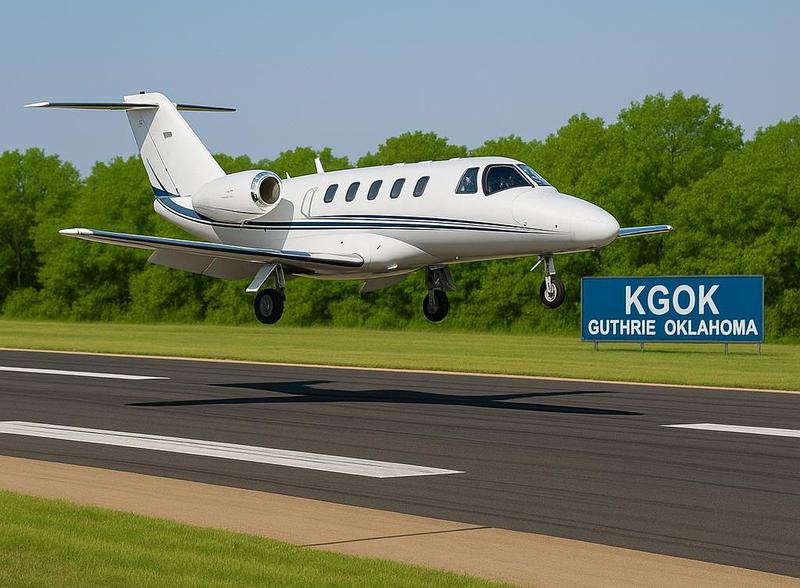
Fly into the nearby Guthrie–Edmond Regional Airport, KGOK, and collect the vehicle.
CABT advertises KGOK as approximately one mile from the shop and notes that its property has a circular drive capable of accommodating large car haulers.
The extensive “state-bound” and “country-bound” videos are part of CABT’s handover and marketing routine, documenting completed vehicles immediately before or during delivery.
14. Sales and marketing procedures
CABT’s principal public marketing channels are:
The official CABT website, containing pricing, specifications, build explanations, inventory and historical photographs.
The CABT Guthrie Oklahoma YouTube channel, used for walk-arounds, construction footage, new inventory and delivery videos.
Search-engine and word-of-mouth traffic generated by unusual completed vehicles.
Customer referrals and repeat exposure at events, campgrounds, towing destinations and automotive gatherings.
Occasional coverage by national automotive websites and publications.
CABT explicitly says it does not operate official Facebook, Pinterest or X/Twitter pages and warns prospective buyers about social-media impersonation and scams.
YouTube has become particularly important because it allows a potential customer to see:
Actual completed trucks rather than renderings.
Vehicles under construction.
Passenger layouts.
Paint and interior quality.
The geographic reach of deliveries.
Completed vehicles continuing to operate years later.
15. Division of responsibilities
The public contact structure identifies two principal conversion contacts:
Tim Huskey: founder, owner, vehicle concept, conversion sales and project direction.
Martin Blaney: conversion inquiries, written specifications, customer communication, website and promotional documentation.
The main office number is used for parts, accounts payable and general business matters. The companion CAP/Cars and Parts by Tim operation handles Ford Super Duty and Excursion parts, recycled components and related parts inquiries.
CABT and Cars and Parts by Tim remain operating businesses; the parts operation supports the broader ability to locate donor components and maintain an inventory of Ford-related material.
16. Normal hours and facility
CABT’s published hours are:
Monday through Friday: 8:00 a.m.–5:00 p.m. Central Time
Saturday and Sunday: Closed
The shop is located at 4514 S. Division Street, Guthrie, Oklahoma 73044.
The site functions as more than a single custom shop. Public information indicates activity involving:
Conversion administration.
Vehicle and parts storage.
Metal and body fabrication.
Paint and body finishing.
Interior assembly.
Used and recycled parts.
Completed-vehicle sales.
Customer pickup and commercial transport access.
17. What CABT does not normally do
CABT’s published boundaries are as important as its offered services.
CABT says it does not:
Restore worn-out original Excursions.
Install a late-model front clip on an old Excursion as a stand-alone upgrade.
Install a modern dashboard in an old Excursion.
install a 6.7-liter Power Stroke into an old Excursion as a routine service.
Modernize or restore old pickups.
Operate as a general repair or restoration shop.
Require the customer to supply the rear donor body.
Sell every vehicle shown on its website; most are examples or customer builds.
The central business is building a specified stretched vehicle around a selected Super Duty foundation—not performing miscellaneous customization on any vehicle that arrives.
18. Information that is not publicly documented
Overall historical significance:
CABT occupies a distinctive place in the custom-truck industry because it helped turn the six-door pickup from a novelty into a recognizable specialty vehicle. The company’s work also kept the Ford Excursion concept alive long after Ford ended factory production.
The basic CABT formula has remained consistent since 1995:
Start with the towing and mechanical capability of a heavy-duty pickup, add enough passenger space for a large family or work crew, and finish the vehicle so that it looks and operates as a coherent purpose-built truck rather than a crude extension.
From one family F-250, CABT developed into a nationally recognized Guthrie manufacturer-converter with vehicles in all 50 states, overseas deliveries, hundreds of documented conversions and a large public video archive. Its continued identity is closely tied to Tim Huskey’s original problem-solving approach, specialized Ford knowledge and decades of salvage, rebuilding and fabrication experience.